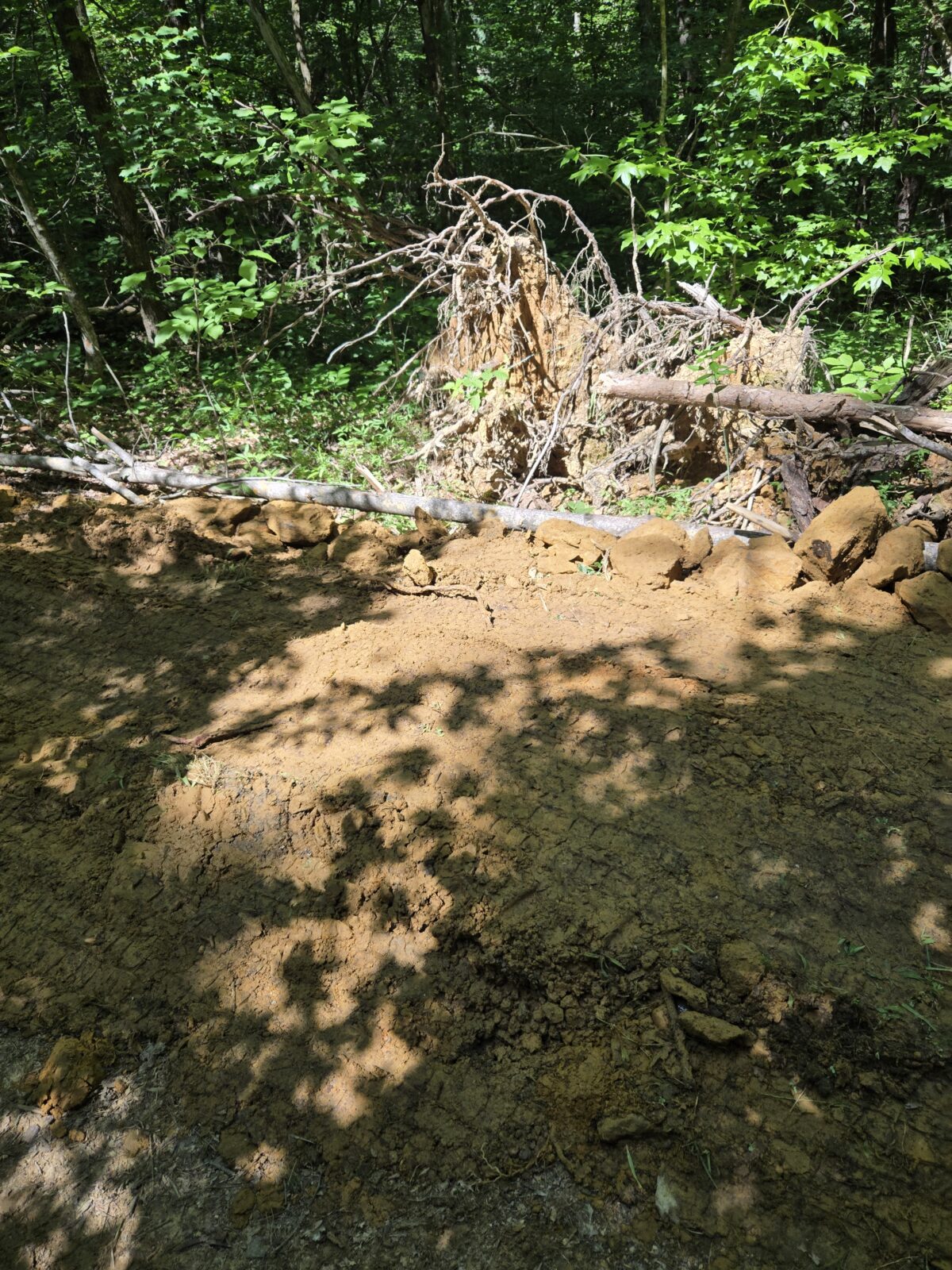
The driveway back to the refuge is about a quarter mile long.
That sounds simple enough until you remember that words like “driveway” can mean very different things depending on where you are. In town, a driveway is a strip of concrete where people park SUVs too large for their actual needs. At the refuge, the driveway is a dirt and gravel path cut through woods, climbing, bending, leaning, washing out, and occasionally reminding you that gravity has been waiting patiently for your attention.
One section in particular has been bothering me.
It is steep, narrow, and tilted to the side. Not a gentle “this could use some grading someday” tilt, either. More like a “pay attention or the woods get a vote” tilt. I would estimate the side slope at about twenty degrees. That may not sound like much on paper, but when you are driving a tractor or SUV down a loose woodland road, twenty degrees becomes very persuasive.
I knew it needed work.
I also knew that work takes material. Dirt. Stone. Time. Equipment. Fuel. The usual list of things that separate plans from reality.
Then, early this morning, reality brought its own dump truck.
A water main leak was found at the edge of the road. The city crew came out, dug into the edge of the driveway, fixed the leak, and filled their repair area with gravel they brought with them. When they finished, there was a large pile of mud and stones left behind.
To most people, that probably looked like cleanup.
To me, it looked like opportunity.
Seeing the Useful Part of a Mess
A lot of work at the refuge comes down to seeing what something can become before it looks useful.
A fallen tree is not just a fallen tree. It might be firewood. It might be a border. It might be temporary cribbing. It might be a post, a brace, or something to stop soil from sliding downhill.
A pile of mud and mixed stone is not just a mess. It might be fill. It might be a rough shoulder. It might be the difference between a driveway that keeps trying to slide into the woods and one that is a little safer to use.
The trick is noticing the window when it opens.
The crew could have hauled the material away. It could have been spread somewhere useless. It could have become someone else’s problem. Instead, I asked them to leave it.
Because out here, useful material sitting in the wrong place is often just useful material waiting for someone stubborn enough to move it.
The Fix
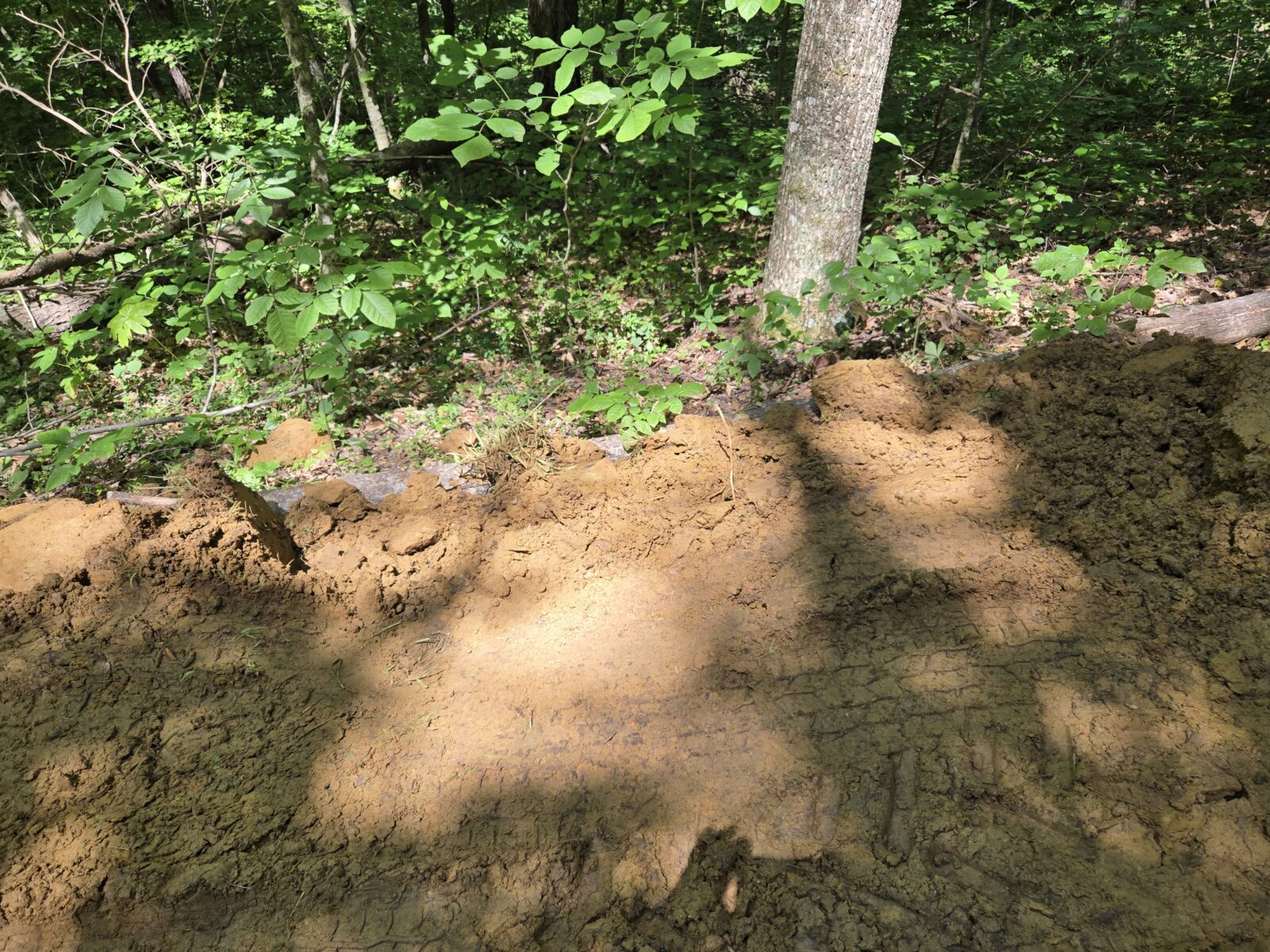
The weak section of the drive needed a stronger outside edge.
I had a tree down nearby that I had not cut into firewood yet. That became the first piece of the repair. I laid it along the side of the path, roughly following the edge of the driveway where the slope falls away.
That log became the beginning of a retaining edge.
Not a permanent engineered wall. Not a beautiful landscape feature. No one from a glossy homestead magazine is going to show up and ask about my “design language.” It is a tree on the side of a dirt road doing honest work, which already makes it more useful than most committees.
Once the log was in place, I started piling larger stones against it. The goal was to keep the fill from immediately sloughing off the side and to give the edge some mass. Then I backfilled the driveway side with the mud and smaller stones from the pile.
The material was not perfect. It was wet, chunky, uneven, and full of clay. But imperfect material in the right place is still better than perfect material sitting at the store, waiting for me to buy it like a civilized fool.
After the fill was placed, I compacted it the practical way: I drove over it.
Repeatedly.
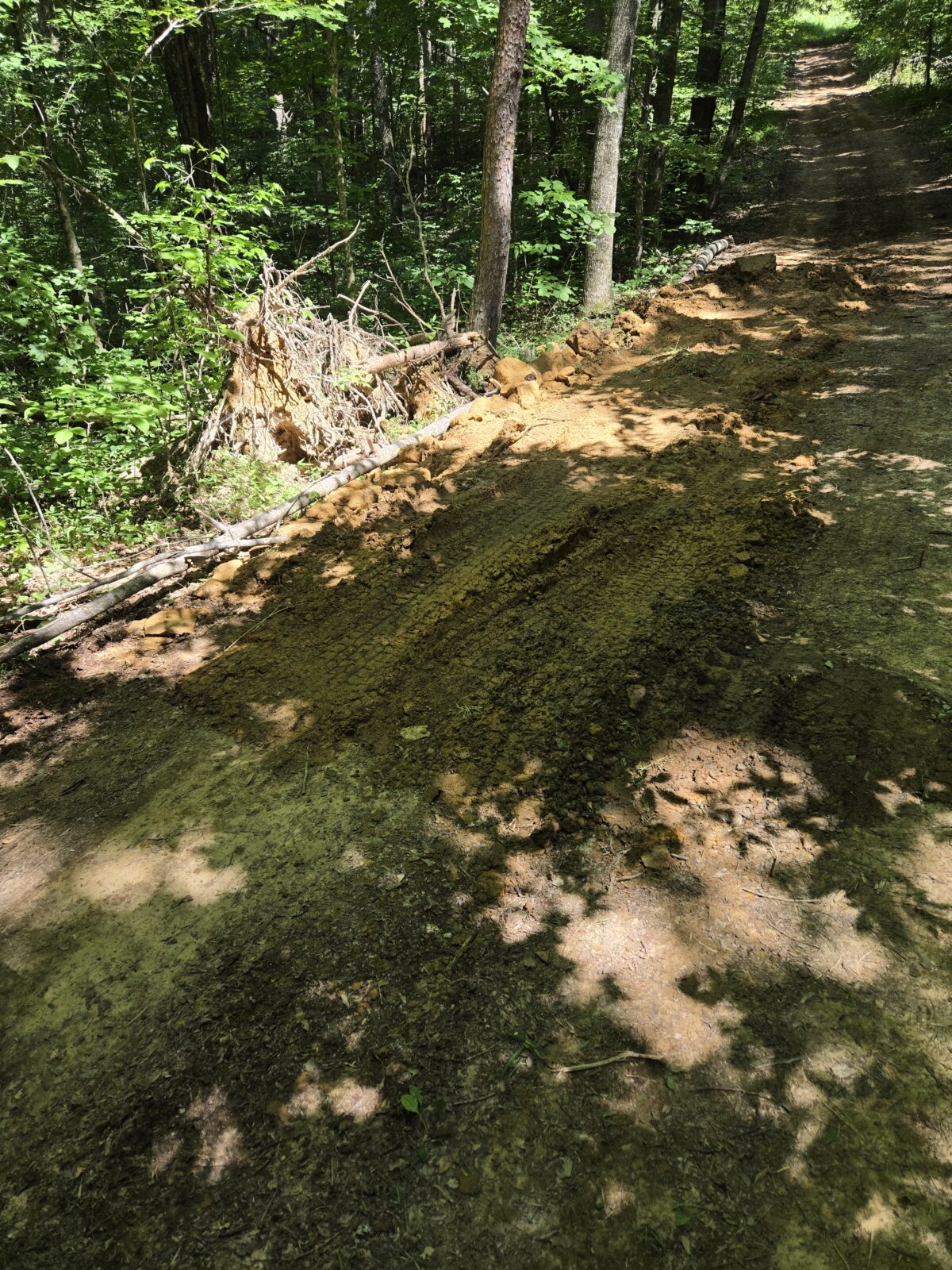
First with the tractor, then with the SUV. Back and forth. Tires doing the work of settling the mud and stone into the low spots. The finished surface is rougher than it was before, but the shape is better. The road now has more shoulder and less of that sideways pull toward the drop-off.
That is a trade I will take.
Rough Now, Better Later
Fresh dirt work rarely looks finished.
Right now the repair is lumpy, soft in places, and still clearly new. That is expected. The ground needs weather and time.
A few rainstorms will help the finer material wash into the gaps. A few dry days will help it tighten up. More passes with the tractor and SUV will continue packing it down. After that, I will be able to see what settled well and what still needs more rock.
This is not the final version of that stretch of driveway.
It is the first useful version.
That distinction matters.
A lot of off-grid and refuge work happens in stages. You do not always get to solve the entire problem at once. Sometimes you improve the situation with what you have, then let weather, use, and observation tell you the next step.
The road will tell me what it needs after a few storms.
Roads are irritatingly honest that way.
The Lesson
The point of this project was not just fixing a driveway.
The point was recognizing an opportunity while it was still sitting there in a muddy pile.
That is a skill worth building.
When you are working on land, especially rural land, progress does not always arrive as a scheduled delivery. Sometimes it comes disguised as a problem. A leak. A fallen tree. A washed-out rut. A pile of material someone else does not want.
You can look at that and see inconvenience.
Or you can ask, “What can this become?”
That question changes things.
The water main leak was not something I planned. The crew digging up the driveway was not something I asked for. But once it happened, there was a choice. I could complain about the mess, or I could use it.
The result is not pretty. It is not done. It is not the kind of thing anyone would confuse with professional roadwork.
But it is safer than it was yesterday.
For the refuge, that counts.
A better driveway means easier access. Easier access means more work can get done. More work getting done means the place becomes a little more usable, a little more reliable, and a little less theoretical.
That is how these places are built.
Not usually in grand dramatic leaps. More often in small, muddy, opportunistic improvements made because someone was paying attention when the world accidentally dropped off a pile of useful material.
Practical Takeaways
- Ask before material gets hauled away. Dirt, stone, gravel, logs, and old timbers can be useful if they are clean enough and placed intelligently.
- Use heavy material on the downhill edge. Larger stones and logs can help hold fill long enough for it to settle.
- Expect settling. Fresh fill changes after rain, drying, and repeated traffic.
- Compact in layers when possible. Even basic tire compaction is better than dumping everything loose and hoping physics becomes generous.
- Treat temporary fixes honestly. A log-and-stone edge may help now, but it still needs inspection after storms.
- Watch drainage. If water is not given a place to go, it will choose one, and it will not consult you first.