Sometimes the Best Homestead Gear Was Never Designed for Homesteading
Spend enough time planning a cabin, homestead, workshop, or off-grid refuge and one problem eventually appears:
Something else wants your supplies.
Food storage is not just about organization. It is about protection.
Mice do not care that you carefully labeled your containers. They are not impressed by your storage system. A plastic tote full of food is not a barrier. It is a challenge.
And sometimes they win.
So what is the answer?
Expensive specialty storage?
Custom-built cabinets?
More plastic bins?
Maybe.
Or maybe the solution is sitting forgotten in an office cleanout.
The Forgotten Steel Cabinet
Businesses replace furniture constantly.
Old filing cabinets, lateral storage cabinets, and office supply cabinets get removed because:
- the office was remodeled
- the color is outdated
- nobody uses paper files anymore
- the company downsized
The same cabinet that no longer makes sense in a modern office can be almost perfect for a homestead.
Why?
Because commercial office furniture was designed for a different world.
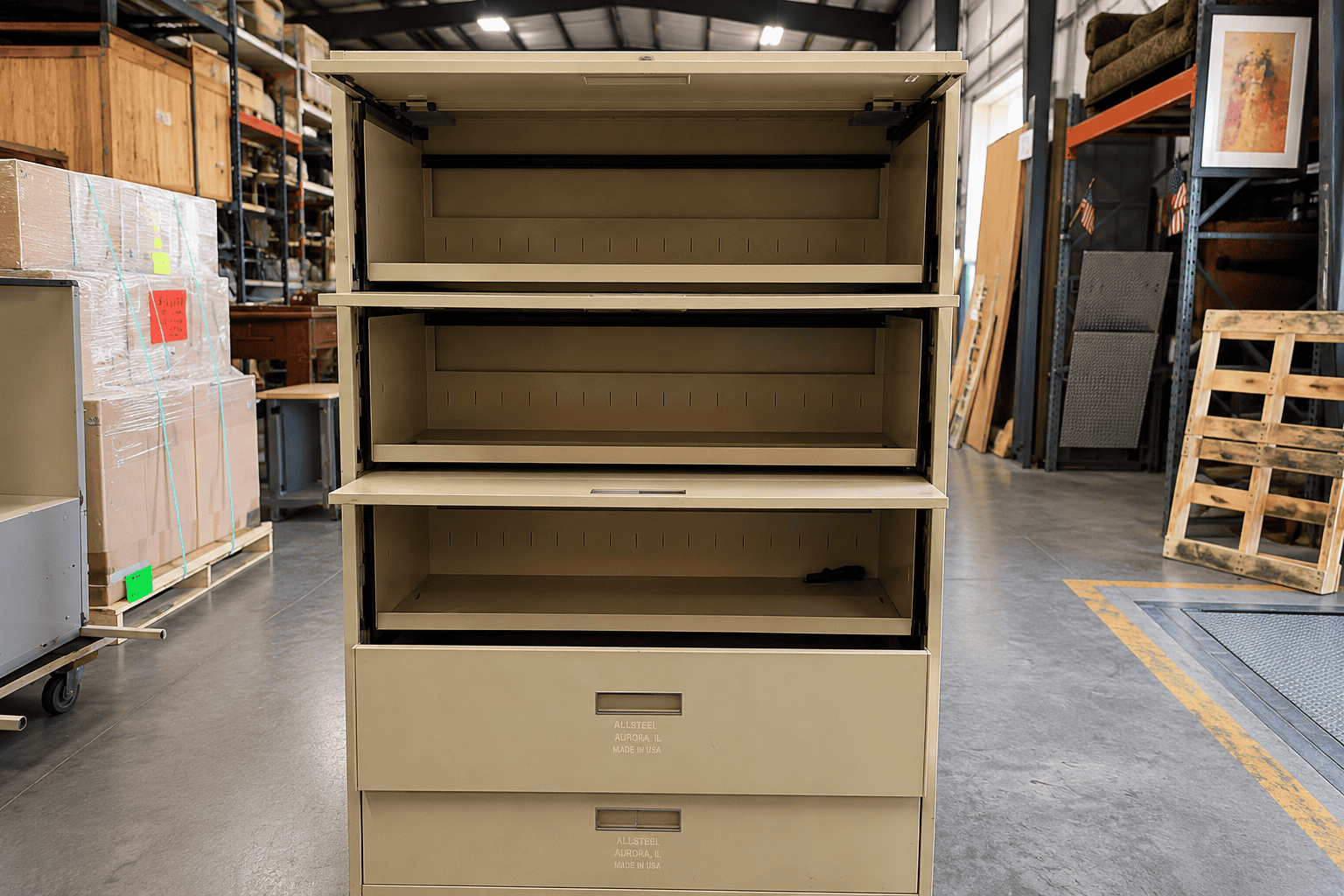
Many older cabinets were built from steel, designed to carry hundreds of pounds of paper, and expected to survive decades of daily use.
Those same qualities make them surprisingly useful when moved from the office to the homestead.
Why Steel Storage Works
A wooden cabinet is convenient.
A plastic tote is inexpensive.
But a steel cabinet adds something important:
A physical barrier.
Proper food storage should still use sealed containers, jars, or buckets inside the cabinet, but steel adds another level of defense.
A mouse may chew through a bag.
A mouse may chew through a plastic lid.
A mouse is going to have a much worse afternoon trying to chew through a properly sealed steel cabinet.
Making It Actually Mouse Resistant
Not every metal cabinet automatically becomes safe storage.
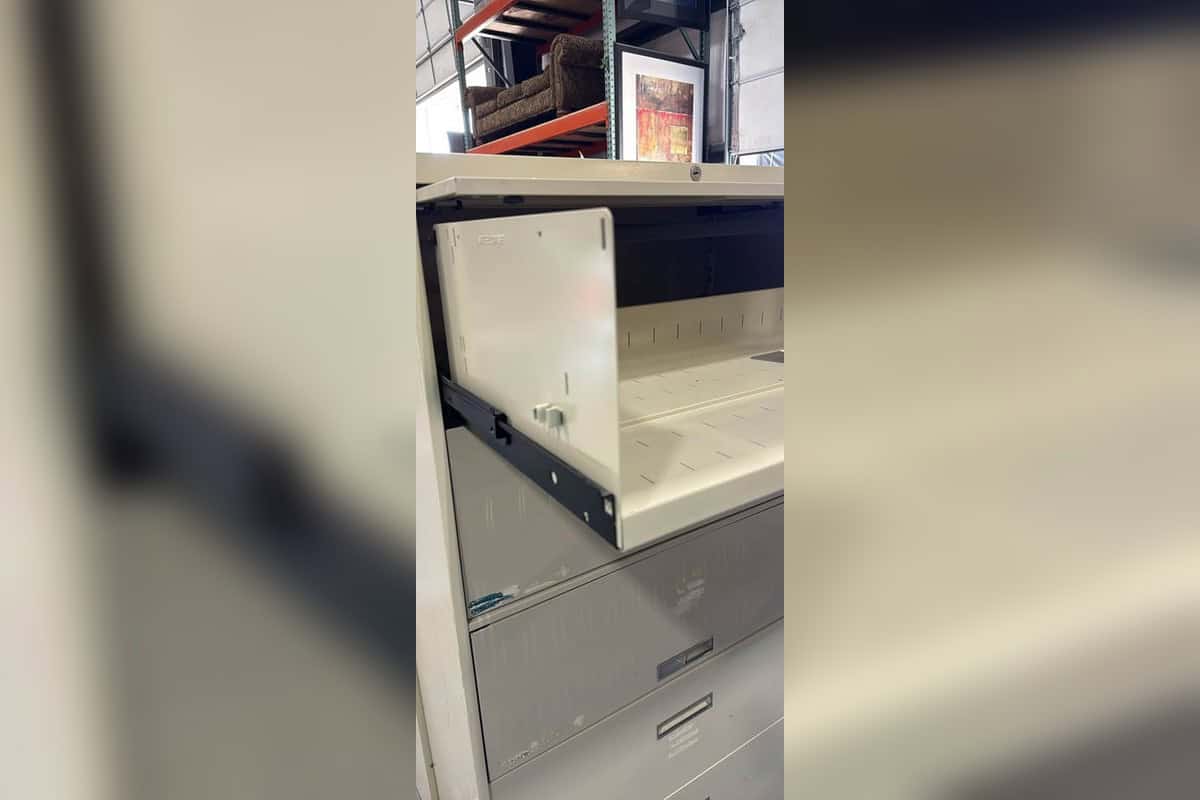
A mouse does not need a large opening. Small gaps around doors, drawers, damaged panels, or missing pieces can turn a great idea into nothing more than a steel apartment building for rodents.
Before bringing home a used cabinet, inspect it carefully.
Check the Gaps
Look around:
- drawer edges
- cabinet doors
- corners
- back panels
- cable openings
- damaged areas
As a general rule, look for gaps no larger than about 1/8 inch.
If you can easily see daylight through an opening, assume a determined mouse will eventually investigate it.
The goal is not just strong material. The goal is removing easy entry points.
Seal the Bottom
The bottom of old cabinets is often overlooked.
Many office cabinets were designed to sit inside clean buildings, not cabins, barns, garages, or seasonal shelters.
Flip the cabinet over and inspect the base.
If needed, add a tight-fitting bottom panel:
- cut plywood or solid material to fit
- fasten securely to the cabinet base
- seal edges where needed
- keep the cabinet raised off damp floors
This also adds strength and helps prevent insects or rodents from finding hidden access points.
Think Like a Mouse
A mouse is not trying to open the front door.
It is looking for the forgotten corner nobody checked.
The back panel.
The missing plug.
The gap underneath.
The damaged edge.
Finding those weak spots before the cabinet is full of supplies is much easier than discovering them afterward.
What to Look For
Not every cabinet is equal.
The best finds are:
- all-metal construction
- deep shelves or drawers
- solid closing doors
- minimal openings or gaps
- adjustable shelves
- replaceable locks
Commercial brands like Steelcase, Hon, and similar office furniture manufacturers were designed for years of workplace abuse.
That toughness translates well into a cabin or workshop.
Great Uses Around the Homestead
Food Pantry
A steel cabinet can organize:
- canned meats
- vegetables
- soups
- pasta
- rice
- beans
- baking supplies
- coffee
- spices
Keeping everything visible also helps with rotation.
Food you cannot find often becomes food you eventually throw away.
Medical Storage
A dedicated cabinet can hold:
- first aid supplies
- bandages
- medications
- sanitation items
- emergency supplies
Keeping these items clean, dry, and organized matters.
Especially when the nearest store is not nearby.
Emergency Supplies
Another cabinet could store:
- batteries
- flashlights
- radios
- chargers
- backup equipment
- important documents
When something goes wrong, searching through random boxes is not a plan.
What About Missing Keys?
Many used office cabinets are sold without keys.
That does not always matter.
A lot of commercial cabinets use replaceable lock cores or numbered keys.
Depending on the cabinet, you may be able to:
- order replacement keys
- replace the lock cylinder
- install matching locks on several cabinets
Imagine multiple storage cabinets around your property all using one key.
Simple systems are usually the ones that keep working.
Preparing a Used Cabinet
Before putting an old cabinet into service:
Clean it
Remove years of office dust and dirt.
Inspect for rust
Surface rust can usually be fixed.
Clean it, treat it, and repaint if needed.
Raise it off the ground
Avoid direct contact with damp floors or soil.
A simple base made from treated lumber or blocks can extend the life of the cabinet.
Manage moisture
Steel helps with pests, but humidity still exists.
Consider:
- desiccant packs
- moisture absorbers
- occasional inspections
The goal is protected storage, not a tiny indoor rain forest.
Repurpose Before You Rebuild
A big part of practical off-grid thinking is learning to look at materials differently.
A cabinet does not stop being useful because it no longer belongs in an office.
A filing cabinet becomes a pantry.
A supply cabinet becomes emergency storage.
A forgotten piece of furniture becomes infrastructure.
Before spending money building something new, look around at what already exists.
Sometimes the best homestead solution is not a new product.
Sometimes it is an old one waiting for a different job.
Field Note Details
Problem Found
Traditional RV cabinets, wood shelving, cardboard boxes, and plastic totes provide limited protection against rodents during long periods away from the refuge.
Food, medical supplies, and emergency equipment require storage that protects against pests while remaining organized and accessible.
Action Taken
Identified surplus commercial steel office cabinets as a potential low-cost storage solution.
Look for cabinets with heavy steel construction, tight-fitting drawers or doors, gaps smaller than approximately 1/8 inch, and minimal openings.
Inspect and seal weak points, especially the bottom of the cabinet. Add a tight-fitting wood or metal base panel if needed to prevent rodent access.
Replace missing locks or rekey cabinets for secure storage.
Result
Commercial office cabinets can provide durable, organized, rodent-resistant storage at a fraction of the cost of purpose-built homestead cabinets.
Repurposed cabinets may be used for food storage, medical supplies, emergency equipment, tools, and other critical refuge supplies.